
Pigs, those plump farm animals, are known to be playful and intelligent. Commonly raised for meat but also serve so many other purposes. But do you ever wonder how pigs sleep?
Pigs sleep for short periods throughout the day & night. Typically, they sleep around 8-10 hours a day. They can sleep standing, lying down, curled up, or snuggled with others. They also sleep in deep & REM sleep, & are sensitive to temperature, noise, light, stress & health.
Keep reading to learn more about the fascinating world of pig sleep and how it affects their overall health and well-being.
How much sleep do pigs need?
Pigs require 8-10 hours of sleep every day on average. This, however, can vary based on various circumstances, including the pig’s age, health, and activity level. Younger pigs may require more sleep than adults, but sick or injured pigs require less.
It’s also worth noting that their surroundings might influence pigs’ sleep patterns. Pigs in outdoor cages may have difficulty sleeping during the hot summer.
Farmers and pig keepers must offer a comfortable and safe environment for their pigs so that they may get enough sleep. This can involve providing a calm, dark sleeping environment for the pigs and keeping the enclosures clean and not overcrowded.
Furthermore, supplying pleasant bedding materials like straw or sawdust is essential. This can assist the pigs to stay cool in hot weather and warm in cold weather, as well as make sleeping more comfortable.
What time do pigs go to sleep?
Pigs are polyphasic sleepers, meaning they sleep for short periods throughout the day and night. They typically spend about 4 hours daily in a deep sleep and the rest in light sleep or awake.
However, pigs’ sleep patterns can be affected by their environment, age, health, and level of activity.
Pigs are sensitive to the natural light-dark cycle and will sleep more during the dark hours. They will tend to be more active during the day with more light.
This is a natural behavior for them, as they are crepuscular animals, active during dawn and dusk.
It’s important to note that the sleep time can vary depending on the pig’s environment. For example, if the pig is kept in a barn with artificial light, their sleep time may be disrupted.
Additionally, if the pig is kept in an outdoor pen, the weather may influence their sleep time.
It is important for farmers and pig keepers to understand the natural sleeping patterns of pigs and provide an environment that allows them to sleep comfortably and at the appropriate times. Good sleep is crucial for the overall health and well-being of pigs.
Pigs Sleeping Positions and Behaviors
Pigs are well-known for their various sleeping positions and behaviors. Some of the most prevalent pig stances and positions include:
Standing sleep
Pigs are the only creatures that can sleep while standing. This is frequently observed in busy or stressful environments where the pig may feel unsafe lying down.
Lying Down
When pigs are safe and comfortable, they usually lie down to sleep. They can be seen lying on their stomachs, legs stretched out behind them, or on their sides, legs curled up.
Curling up
When sleeping, pigs can be seen curling up into a ball-like shape. This posture is frequently observed in cold weather or when the pig attempts to conserve heat.
Pigs have been recorded creating nests from straw or other items before sleeping. This behavior is frequently observed in sows (female pigs) about to give birth.
Snuggling
Pigs are gregarious creatures that frequently sleep next to one another. They’ll cuddle close to each other for warmth and protection.
It is crucial to note that pig resting positions and behaviors might differ based on the pig’s age, health, and degree of activity, as well as the environment in which they are. Farmers and pig keepers must understand these characteristics to offer a comfortable sleeping environment for their pigs.
Why do pigs sleep nose to nose?
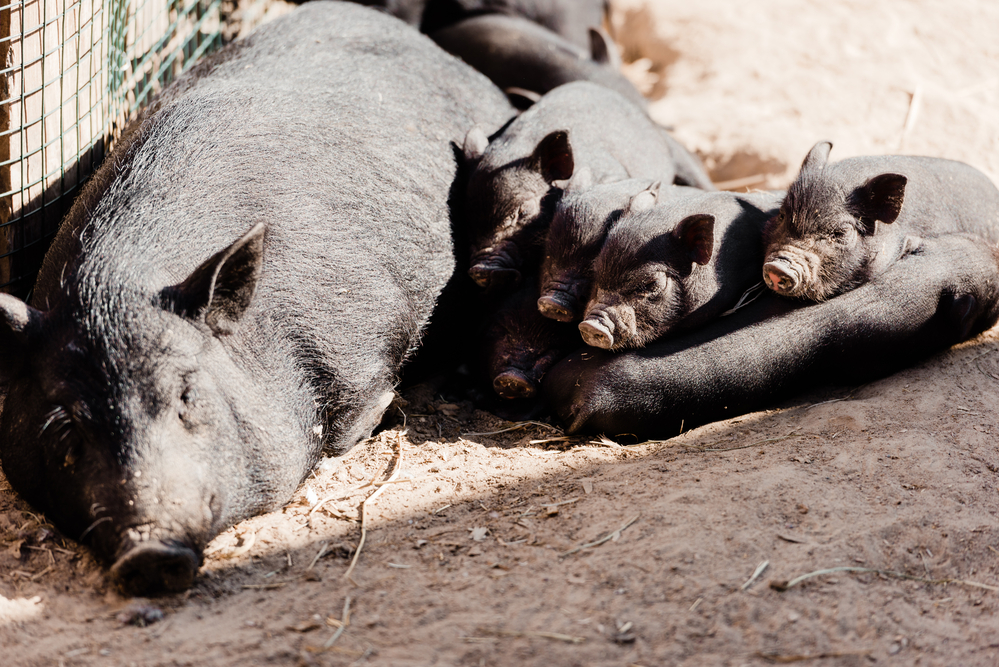
Pigs are social creatures that frequently sleep in close quarters. They’ll cuddle close to each other for warmth and protection. Sleeping nose to nose is a common pig activity, especially when confined in tight quarters. Piglets, sows, and boars exhibit this behavior.
Pigs can conserve heat and stay warm by sleeping nose to nose. Huddling together and sharing body heat allows pigs to keep each other warm. Pigs feel safer when they are around other pigs. Therefore, this behavior provides a sense of security and comfort.
Pigs use their sense of smell to communicate, and by sleeping nose to nose, they can exchange aromas and pheromones that aid in social bonding and communication.
It’s also worth noting that sleeping nose to nose is observed when pigs are in tight quarters and when they have enough room. It’s a natural behavior for them and how they establish authority and hierarchy within their community.
They require proper nourishment, including appropriate calories and protein, to sustain good sleep patterns.
It’s crucial to remember that these elements can interact and that more than fixing just one may be needed to ensure pigs get adequate sleep. It is critical to balance these aspects to offer a comfortable and safe environment for the pigs to sleep in.
Environmental and physiological factors that can influence pig sleep
Temperature
Pigs are temperature sensitive and will adapt their sleeping patterns accordingly. They will sleep more in hot heat to preserve energy and stay cool and less in cold weather to stay warm.
Noise
Pigs are sensitive to noise and will have difficulty sleeping if exposed to loud or continuous sounds. Noise from other pigs, machinery, or human activities can all contribute to this.
Light
Pigs also have a natural light-dark cycle and will sleep more during the night. Artificial lights can disturb this cycle and disrupt sleep.
Stress
Pigs subjected to stressful settings, such as overcrowding or aggressive behavior from other pigs, may struggle to sleep.
Health
Pigs’ health can also influence their sleeping patterns. Pigs that are sick or injured may have difficulty sleeping, necessitating extra care and attention from farmers and pig keepers.
Nutrition
The diet of pigs is very crucial in their sleep. To sustain good sleep patterns, pigs require proper nourishment, including appropriate calories and protein.
It’s crucial to remember that these elements can interact with one another and that fixing just one of them may not be enough to ensure pigs get adequate sleep. It is critical to balance these aspects to offer the pigs a comfortable and safe environment.
Summary – How pigs sleep?
- Pigs sleep during small periods of day and night, usually 8-10 hours.
- They can sleep in various positions, including standing, lying down, curling up, and cuddling with others.
- Pigs sleep nose to nose because it allows them to be warm, safe, and communicate with their group.
- Temperature, noise, light, stress, and health are all environmental and physiological elements that might influence pig sleep.