
Have you ever wondered if pigs are capable of jumping? From farmyards to festivals, we’ve seen pigs of all shapes and sizes, but have you ever seen one jump?
Pigs are not naturally motivated to jump, but they can be trained to do so with the correct instruction. However, their weight and leg structure limit their ability to jump. It may not be necessary or advantageous for the pig’s wellbeing.
Read on to learn the key factors that affect the ability of a pig to jump, and also whether you can train a pig to jump!
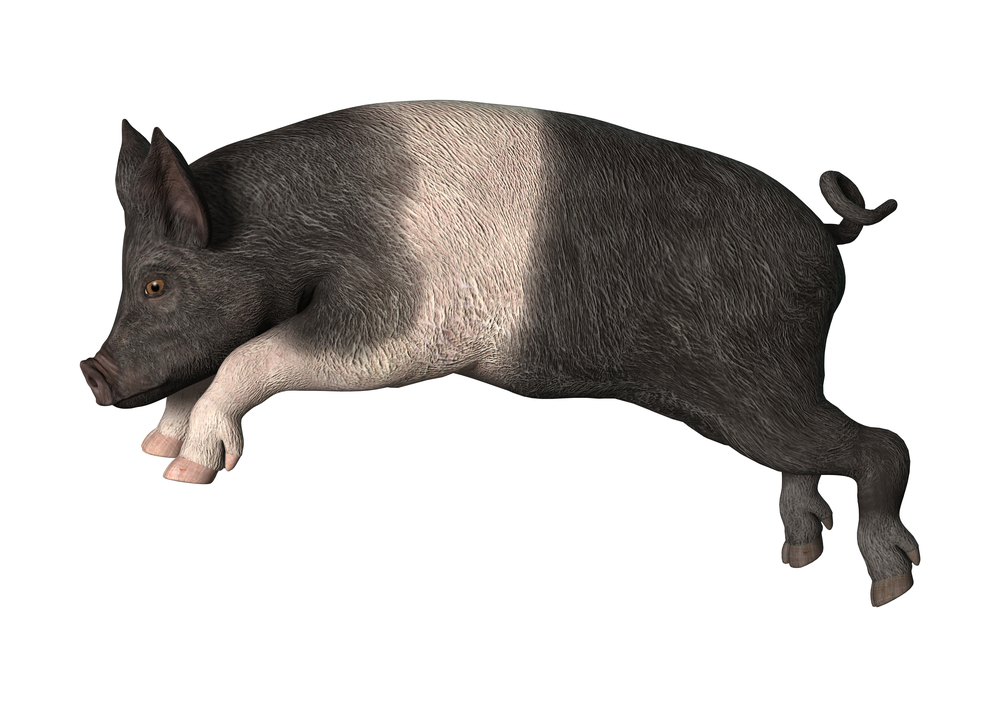
The Anatomy of a Pig Makes Jumping Difficult
Pigs are well-known for their robust, barrel-shaped bodies, but many people may not understand that their morphology makes it difficult for them to jump. Pigs are capable of running and even climbing, but jumping is not a natural action for them. Several elements relating to the anatomy of a pig are responsible for this.
First, pigs have very short and thick legs, which are unsuitable for jumping. Pigs’ leg bones are not as extended as those of animals noted for jumping, such as horses or deer. This makes it difficult for pigs to create enough energy to propel themselves off the ground. In addition, the muscles in a pig’s legs are not as well-developed as those of animals that can jump, further limiting its jumping capacity.
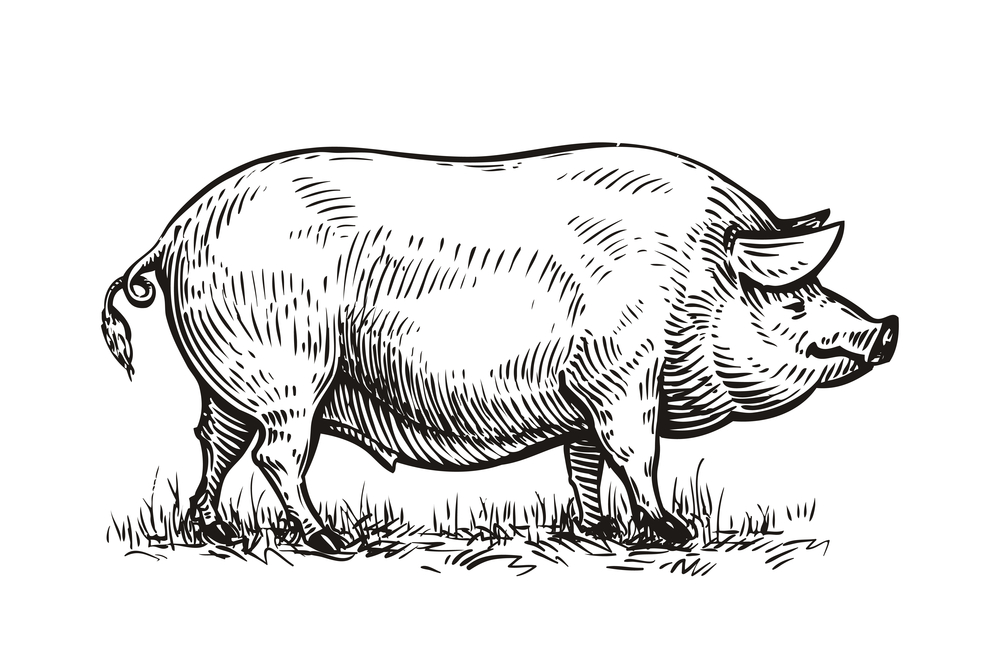
The weight of a pig is another aspect that impacts its capacity to leap. Pigs can weigh several hundred pounds, and their bodies are not designed to raise weights of this magnitude off the ground. It is difficult for pigs to maintain balance and stability while jumping due to their relatively low centre of gravity. In addition, their bodies are less aerodynamic than those of jumping animals, which makes it more difficult for them to generate lift and maintain velocity in the air.
Lack of mobility and flexibility in the pig’s spine also contributes to its incapacity to leap. Due to the fact that the spine is largely designed to support the pig’s weight, its legs are unable to move freely and it is difficult for it to leap.
Moreover, the hooves of a pig are not designed for jumping. It is difficult for hooves to grasp and push off the ground since they are often rigid and stiff. The huge size of pigs’ hooves makes them less manoeuvrable than the tiny hooves of other animals.
Notably, despite the fact that jumping is not a natural activity for pigs, it is not impossible for them to do so. Pigs are capable of learning to jump with the right instruction, although this is still uncommon. Generally speaking, pigs are more suited to activities such as sprinting and rooting around in the soil, which are more in keeping with their natural abilities.
Due to its short and thick legs, hefty weight, low centre of gravity, rigid spine, and huge hooves, a pig’s anatomy makes it difficult for it to jump. These physical traits limit their ability to jump and make it more difficult for them to execute this motion.
Do Pigs Jump Naturally? Do they Want or Need to Jump?
Pigs are not recognised for their leaping ability, nor is jumping a popular action in their natural habitat or on farms. In the wild, pigs inhabit habitats such as forests, swamps, and grasslands, where they spend the majority of their time searching for food, migrating to discover new food sources, and interacting with other pigs.
Wild pigs rarely exhibit the activity of jumping since it is not essential for their survival in their natural habitats.
On farms, pigs are primarily reared for meat or pork production, and jumping behaviour is not encouraged. Typically, these pigs are confined to non-jumping cages or enclosures, and their activities are limited to eating, sleeping, and mingling with other pigs.
In these conditions, jumping is not essential to their survival nor conducive to their well-being, nor is it a regularly observed or promoted habit among domestic pigs.
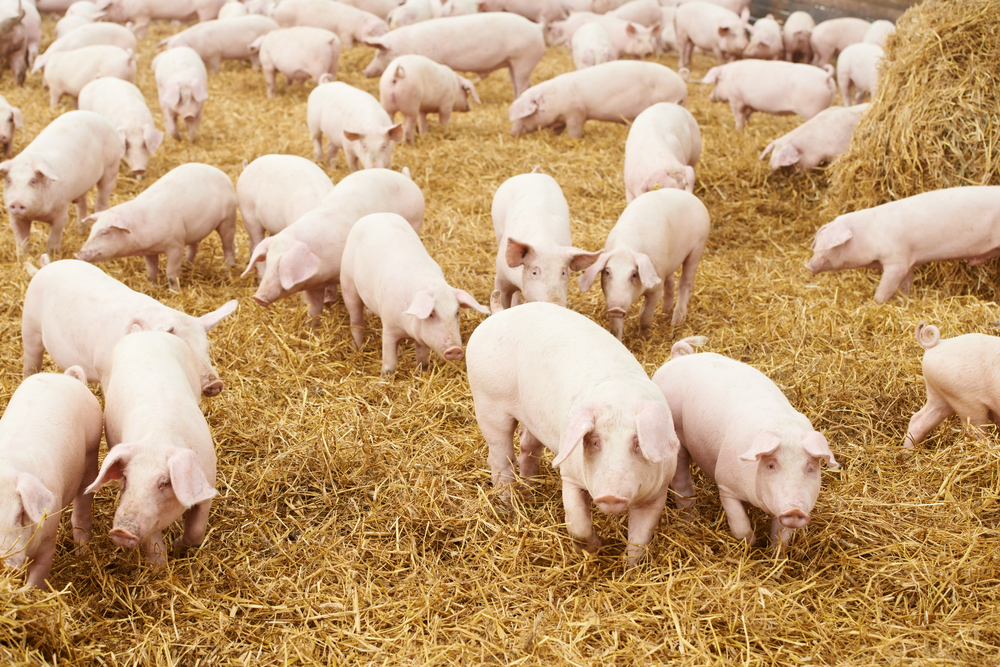
In addition, throughout the years, selective breeding has rendered domestic pigs less eager to do athletic motions such as jumping, and has increased their weight, further limiting their jumping capacity.
Notably, despite the fact that pigs do not typically jump in the wild or on farms, it is not impossible for them to do so. Pigs can learn to jump with proper training and conditioning, although jumping is not a natural trait for them and is rarely witnessed in either wild or domesticated pigs.
Jumping is not a natural activity of feral or domesticated pigs. They are not required to jump due to their living conditions and activities. Wild pigs spend their time foraging and associating with other pigs, but domestic pigs are raised and kept for meat production; hence, jumping is not a common habit recorded in either species.
Can you Train a Pig to Jump?
It is possible to train a pig to jump, but it requires more time and effort than it would for naturally inclined animals.
Positive reinforcement strategies are often employed, and it is essential to consider the pig’s physical limitations, offer sufficient room, and operate under the supervision of a skilled trainer.
In addition, it is essential to keep in mind that jumping is not a natural habit for pigs and may not be necessary or useful for their well-being.
What does a Pig’s Jumping Ability mean for farmers?
Pigs may be more likely to injure themselves when attempting to jump if farmers keep them in pens or enclosures that are not suitable for jumping, such as those that are too low or lack adequate soft landing material.
If farmers maintain pigs in surroundings that are excessively restrictive and do not allow for natural activities, the pigs may experience frustration and stress, which can manifest in aggressive behaviour and lower output.
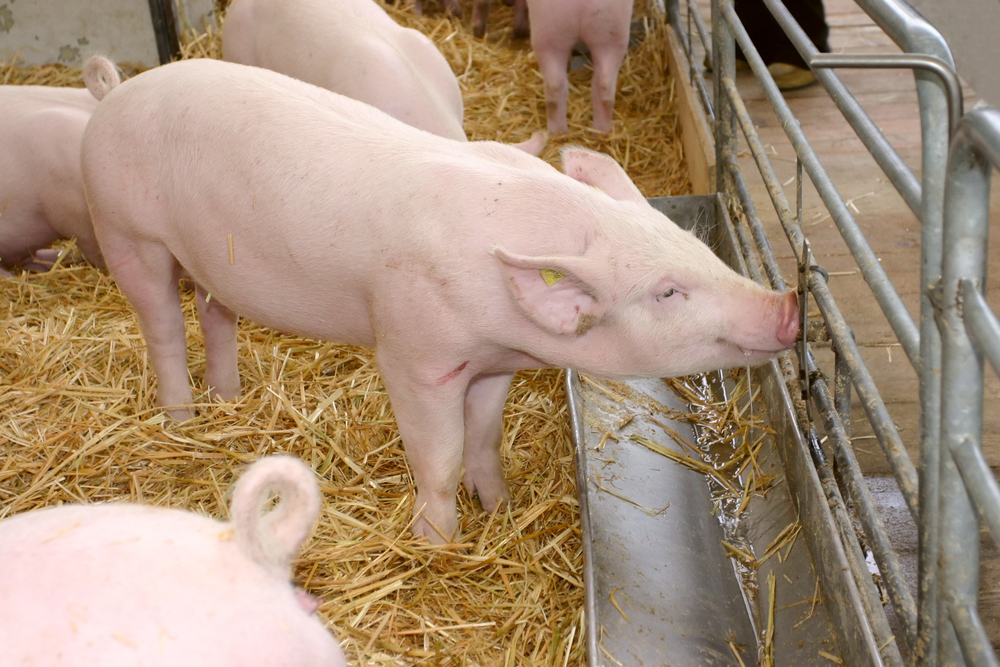
Summary
In conclusion, after examining the anatomy, natural behavior, and training aspects of pigs, consider the following points:
- Pigs are not naturally inclined to jump.
- Jumping is not a natural behavior for pigs and it is not commonly observed in wild or farm pigs.
- Pigs can be trained to jump, but it takes more time and effort than other animals.
- The physical characteristics of pigs such as weight and leg structure limit their jumping abilities.
- Training pigs to jump is not necessary or beneficial for the pig’s welfare.